The People We Stop Noticing
We notice when someone starts showing up and when they stop. What’s harder to see is what they’ve been doing for us all along.
We notice when someone starts showing up.
We notice when someone stops.
What’s harder to notice is the person who has simply been there all along.
At first, their dependability stands out.
Then it becomes familiar.
Eventually, it becomes part of how things work.
Dependability can make people invisible
Think about the person who quietly holds a gathering together.
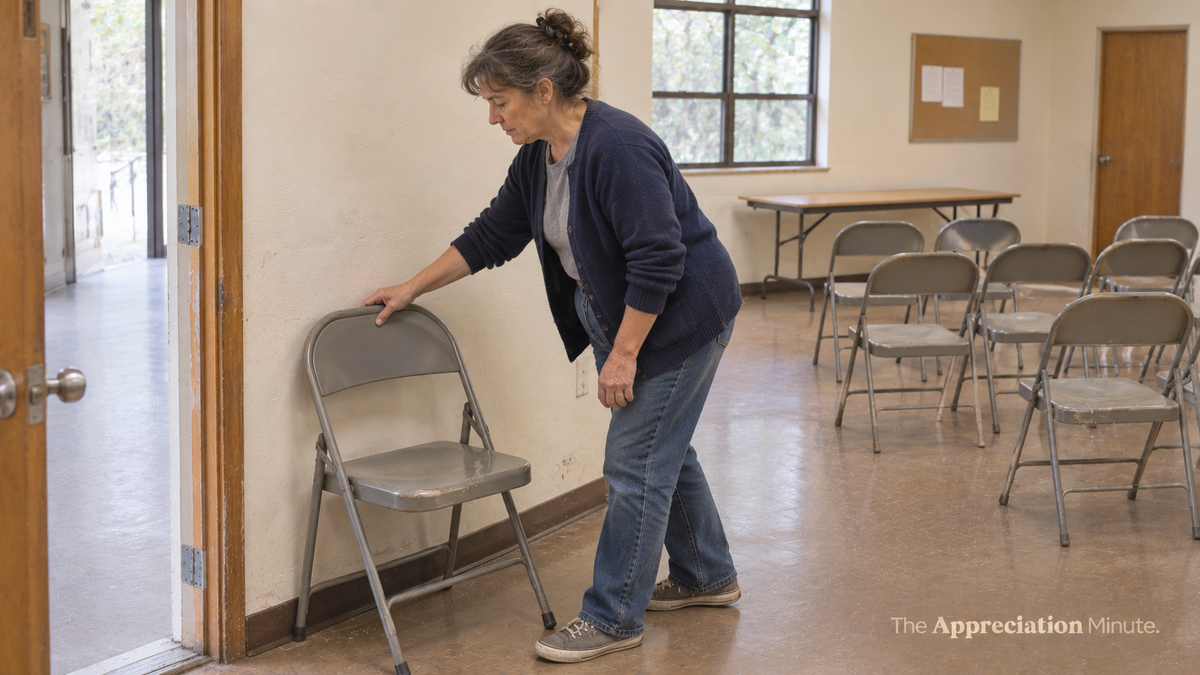
She notices the new volunteer standing alone and brings her into a conversation. She finds the missing extension cord, remembers who needs a chair near the door, and stays until the last table is folded.
Then one week she’s away. No one thinks to put a chair near the door. At the end of the night, someone asks who usually stays to fold the tables.
The more consistently someone carries something, the easier it becomes to forget that they are carrying it.
Attention follows disruption
We notice the employee who rescues a deadline. It’s harder to see the person who quietly kept the previous eleven deadlines from becoming emergencies.
The same thing happens at home. The person who keeps track of appointments and prescription refills may hear how much everyone depends on them the week they’re out of town. The work was there the week before, too.
Familiarity is not appreciation
We may value these people deeply. We trust them. We turn to them when something matters. We may assume they know what their effort means to us because we rely on them so often.
Reliance can sound like this.
“I knew you would handle it.”
Appreciation can sound like this.
“You noticed we were running out of time and got two people to help with cleanup. We were able to finish before the building closed.”
One sentence tells the person what you expected. The other tells them what you saw.
Look beyond the visible result
Some contributions are easy to count. Sales made. Projects completed. Hours volunteered.
Others are felt more than measured. A colleague explains something without making anyone feel foolish. Someone in a tense meeting asks the question that gives everyone a chance to slow down and think. A community member checks in when someone hasn’t been around for a while.
There’s also a question of who gets asked to do work that carries little weight when contributions are evaluated. In a 2017 study published in the American Economic Review, Linda Babcock and her colleagues found that women were more likely than men to volunteer for, be asked to take on, and agree to do tasks with little potential to help them advance.
That raises a question worth asking in our own workplaces. Who keeps getting asked to do the work everyone depends on, and how much does that work count when we evaluate their contribution?
Take an attention audit
Think about one part of your life. It could be your workplace, a group you belong to, or your family.
- Who quietly prevents problems that would otherwise demand attention?
- Who keeps track of details other people rely on?
- Who makes it easier for someone else to participate or succeed?
You may think of someone you’ve thanked many times. Would they know what you mean when you say “thanks for everything”?
Tell them what changes because they’re there
Choose one person and name something you’ve seen them do. If you know what it changes for someone, tell them that, too.
“I’ve noticed you ____. It makes ____ easier for ____.”
Maybe it sounds like this.
“I’ve noticed you always leave a chair near the door for anyone who needs it. It makes it easier for people to come in and join us.”
Then tell them. An ordinary day will do.
Sometimes appreciation begins by noticing who we have stopped noticing.