A System Can Remember. Only a Person Can Appreciate.
Sometimes the moment passes while we’re waiting for spontaneity. A well-timed reminder can give us a chance to say what we’ve been meaning to say.
We want appreciation to feel spontaneous.
So we leave it to memory.
Then the week gets busy. The anniversary passes. The thank-you stays on the list. We think of the longtime client when it’s time to ask for something.
Someone says, “We really should do a better job of recognizing people.”
And everyone agrees.
Caring and remembering are different jobs
We put meetings on calendars, track invoices, and set reminders for deadlines because important things can slip by during a busy week. With appreciation, we sometimes worry that planning ahead will make it feel forced. We want the words to come naturally, in the right moment.
Sometimes the moment passes while we’re waiting for spontaneity.
In 2024, Gallup reported that just 22% of employees said they received the right amount of recognition for their work, citing research with Workhuman.
A reminder can help with one part of that problem. It gives you time to think about what you want someone to know while there’s still time to tell them.
What a reminder can do
Imagine Jordan reaches a work anniversary and gets an automated message.
“Congratulations on another year. We appreciate everything you do.”
The system worked. The date was remembered. The message was delivered.
Now imagine the system sends Jordan’s manager a reminder a week earlier.
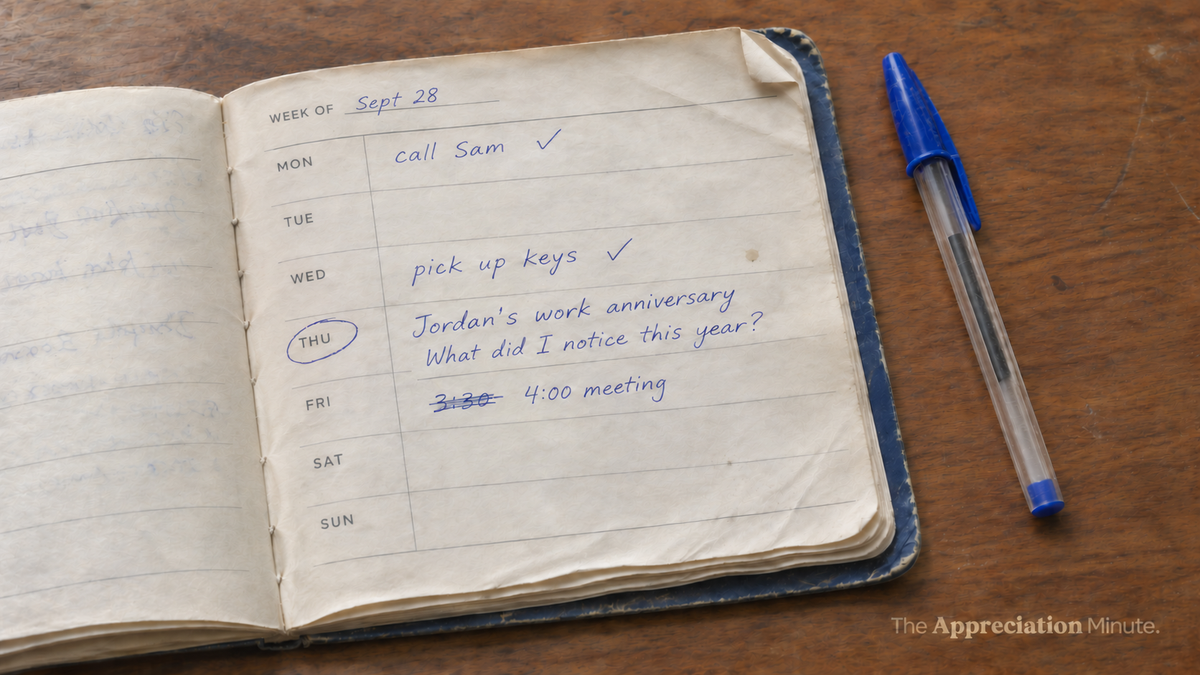
“Jordan’s anniversary is next week. What did you see Jordan do this year that you’d like them to know you noticed?”
The manager thinks about the weeks when two new hires joined the team. Jordan made a short guide to questions people kept asking, then checked in with both of them after their first week.
“I noticed you made that guide and checked in with both new hires after their first week. I appreciated that you took the time to see how they were actually doing.”
The reminder gave the manager a reason to pause. The manager had something to say because they’d been paying attention.
Start smaller than you think
Pick one person and one moment in the next month. Set a reminder a few days ahead and put a question in it that only you can answer.
Maybe a friend is leaving a job they’ve held for years. A few days before their last day, your reminder could ask, “What have I seen them give to this work that I’d like them to hear from me?” That gives you time to think about what you’ve noticed and decide whether to send a note or give them a call.
There’s still room for the unexpected text, the spontaneous compliment, and the thank-you that comes to you in the moment. A reminder helps with the moments you already know you want to make time for.
The system remembers.
You make it personal.